


Everlastings Wild Flower Seed Packet
$6.70
Coming in a myriad of colours, Everlasting Daisy seeds are ideal for dry landscape mass bedding, filling your flower garden borders, containers, or cut flowers. Also known as Paper Daisy Seeds, they...

Red Flowering Gum Wild Flower Seed Packet
$6.70
Formerly listed as a Eucalypt, many will recognise the beautiful red flowers from Australian Christmas-time bouquets, where these striking flower seeds produce blooms that make a distinctive and...
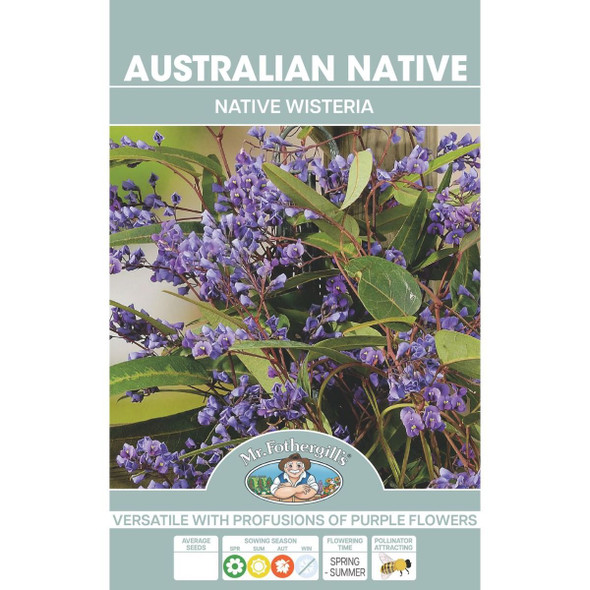
Native Wisteria Wild Flower Seed Packet
$6.70
Hardenbergia, also known as Native Sarsaparilla, this attractive and hardy groundcover has become a trusted landscape addition in parks, gardens and urban plantings. Its glossy green leaves provide a...
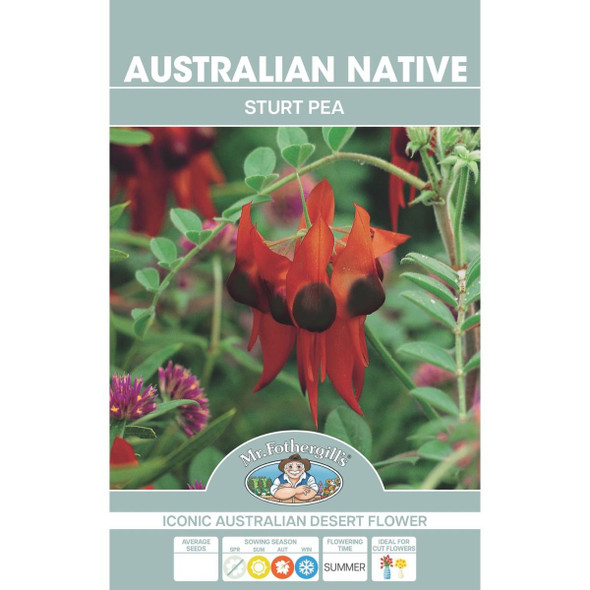
Sturt Pea Wild Flower Seed Packet
$6.70
Another iconic Australian wildflower, originating from the deserts of Western Australia and the Northern Territory. Its distinctive elongated red flowers and piercing black eye make it a most sought...

Yanchep Rose Wild Flower Seed Packet
$6.70
Botanical Name: Diplolaena angustifolia.
How to Sow Seeds
Method: Sow in warm areas anytime.
Depth: Sow seeds on surface and cover lightly.
Transplanting: Transplant to individual containers when...
