


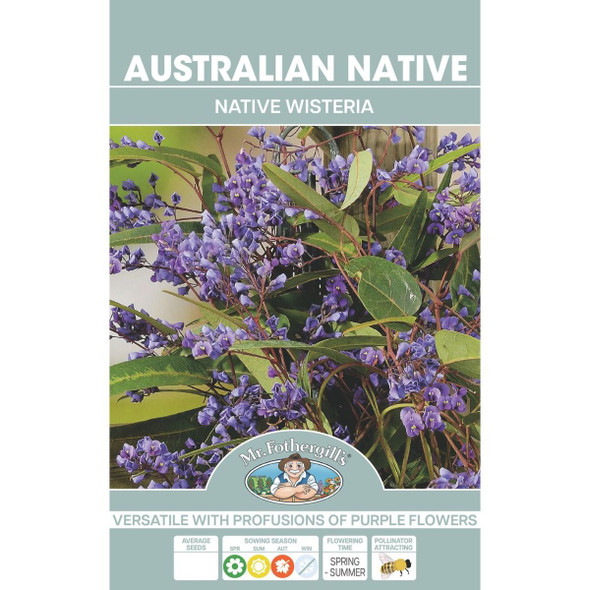
Native Wisteria Wild Flower Seed Packet
$6.70
Hardenbergia, also known as Native Sarsaparilla, this attractive and hardy groundcover has become a trusted landscape addition in parks, gardens and urban plantings. Its glossy green leaves provide a...

Native Iris Wild Flower Seed Packet
$6.70
An excellent hardy perennial species for the home garden. Produces wonderful purple flowers in the Spring.
Exceptionally frost hardy and drought tolerant once established.
Get the best quality...

Australian Native Mix Wild Flower Seed Packet
$6.70
Australian wildflower seed mix is full of beautiful native wildflowers blended according to availability and season, including Billy Button, Golden Everlasting, Kangaroo Paw, and many more stunning...

Native Leek - Golden Lily Wild Flower Seed Packet
$6.70
Bright golden-yellow star-shaped flowers are borne on slender stems above attractive grassy foliage from spring into summer. Native Leek, also known as Golden Lily, is a hardy Australian native...

Everlastings Wild Flower Seed Packet
$6.70
Coming in a myriad of colours, Everlasting Daisy seeds are ideal for dry landscape mass bedding, filling your flower garden borders, containers, or cut flowers. Also known as Paper Daisy Seeds, they...
